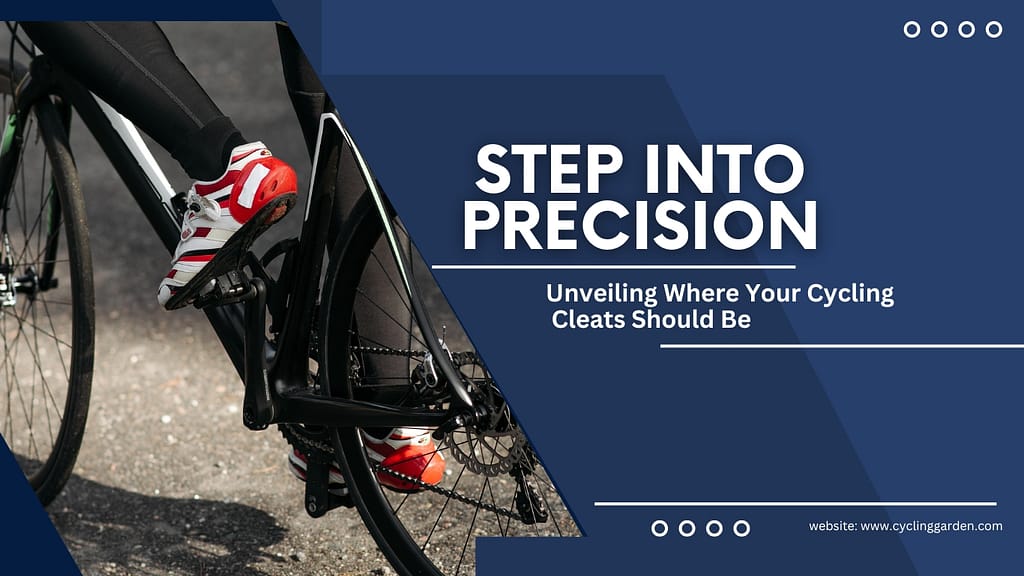
Maximizing Performance and Comfort through Proper Cycling Cleat Positioning When it comes to cycling, every detail matters, from the type of bike shoes to the positioning of the cleats. One crucial aspect that often goes unnoticed is the correct placement of cycling cleats on your shoes. However, understanding the importance of proper cleat positioning can greatly enhance not only your pedal efficiency but also your overall comfort while cycling. Cycling cleats play a vital role in connecting your bike shoes to the pedals. When positioned correctly, they allow for optimal power transfer and stability throughout your pedal stroke. This means that with proper cleat positioning, you can maximize each ounce of energy exerted and achieve greater speed and efficiency on the road or trail.
Moreover, accurate cleat alignment promotes a more comfortable riding experience. By ensuring that your feet are properly supported and aligned with the pedals, you reduce the risk of developing discomfort or even pain during long rides. which cycling cleat are best Whether you’re a professional cyclist or an avid enthusiast, investing time in adjusting and fine-tuning your cleat position will undoubtedly pay off in terms of both performance and enjoyment.
–

Furthermore, proper cleat positioning allows for better biomechanics while pedaling. The way your foot interacts with the pedal plays a crucial role in preventing unnecessary strain on your joints and muscles. By optimizing cleat placement based on factors such as foot anatomy, riding style, and individual preferences, you can achieve a more natural motion that reduces fatigue and potential injuries over time. Neglecting the significance of proper cycling cleat positioning would be a disservice to both yourself as a cyclist and to achieving optimal performance outcomes. By taking the time to understand how different factors impact optimal alignment, such as bike shoe types, personal riding goals, or even terrain variations, you can unlock new levels of efficiency and comfort during every ride. Stay tuned as we dive deeper into this topic to explore various techniques for achieving the perfect cleat position that suits your unique needs.
Finding the Right Cleat Position for Your Feet and Riding Style
When it comes to optimizing your cycling performance, finding the perfect cleat position for your feet and riding style is of utmost importance. The position of your cycling cleats can significantly impact your power transfer, comfort, and overall efficiency on the bike. So let’s delve into the key factors you need to consider in order to achieve the ideal cleat position.
First and foremost, foot angle plays a crucial role in determining the right cleat position. By analyzing how your feet naturally sit on the pedals, you can adjust the positioning of your cleats accordingly. This will ensure that your feet are properly aligned with the pedal stroke, minimizing any potential discomfort or inefficiency caused by misalignment. Another vital aspect to consider is forefoot Varus/valgus alignment. This refers to any differences in alignment between the forefoot (the front part of your foot) and rearfoot (the back part of your foot). Correcting any imbalances through proper adjustment of the cleat position can help alleviate strain on certain areas of the foot and promote a more stable and efficient pedal stroke.
In addition,
The toe-in/toe-out angle should not be overlooked when finding the optimal cleat position. Adjusting this angle allows for a more natural alignment with your knee joint during each pedal revolution. This helps reduce unnecessary stress on joints and muscles, improving both comfort and performance. Lastly, don’t forget about Q-factor adjustment, a critical factor often disregarded by many cyclists. The Q-factor refers to the width between each pedal attachment point on the crank arms. By adjusting this distance appropriately according to your body’s anatomy, you can achieve a more biomechanically efficient pedaling motion while minimizing strain on your hips, knees, and ankles. Taking all these factors into account when fine-tuning your cycling cleat position will undoubtedly lead to improved performance and an enhanced overall riding experience.
1. Assessing forefoot alignment and finding the neutral position

When assessing forefoot alignment and finding the optimal neutral position, it is crucial to understand the importance of precise foot positioning. By carefully evaluating the alignment of the forefoot, we can ensure proper weight distribution and minimize potential discomfort or injuries during physical activity. Road cycling shoes for flat pedals One of the key factors in achieving this ideal position is identifying the neutral foot position.
This involves aligning the foot in a way that allows for optimal biomechanical function and stability.
By finding this neutral position, we can optimize performance and reduce any unnecessary strain on the feet. Another essential aspect to consider when assessing forefoot alignment is cleat placement under the ball of the foot. Proper cleat positioning plays a significant role in enhancing power transfer, improving pedaling efficiency, and reducing undue stress on specific areas of the foot. By conducting a thorough assessment of forefoot alignment and ensuring proper cleat placement under the ball of the foot, athletes can experience an enhanced level of comfort, efficiency, and overall performance during various activities such as running or cycling. Investing time in understanding these critical aspects not only benefits professional athletes but also individuals who engage in recreational sports or fitness activities.
So whether you’re a dedicated athlete seeking peak performance or simply someone who values optimal foot health during exercise, taking into account forefoot alignment assessment and finding that perfect neutral position will undoubtedly contribute to your overall success and well-being.
2. Adjusting for Optimal Knee Alignment and Pedal Efficiency
Achieving optimal knee alignment and pedal efficiency is crucial for any cyclist or athlete looking to maximize their performance and prevent potential injuries. To ensure that your knee joints remain in the proper alignment, a comprehensive knee alignment assessment should be conducted. This assessment involves evaluating the biomechanics of your knees during the pedal stroke to identify any deviations or misalignments.
By closely monitoring the tracking of your knees throughout the entire pedal stroke, you can pinpoint any irregularities that may be hindering your performance. Adjusting cleats, which are attached to your cycling shoes, is an effective method for achieving proper knee alignment. By making precise adjustments to the position and angle of your cleats, you can optimize the alignment of your knees during each rotation. Proper knee alignment not only enhances pedal efficiency but also helps distribute forces evenly across all major muscle groups involved in cycling. This balanced distribution reduces the risk of overuse injuries and improves overall riding comfort. With regular assessments and adjustments, you can maintain optimal knee alignment, a key factor in achieving peak performance and enjoying a smooth ride.
Investing time in adjusting for optimal knee alignment demonstrates a commitment to both performance enhancement and injury prevention. Take advantage of the advanced technologies and expert guidance available today to fine-tune your cycling setup. By prioritizing proper knee alignment during training sessions or competitions, you are optimizing every revolution of your pedals towards reaching new heights in athletic achievement.
3. Considering Individual Anatomical Variations and Comfort Factors
Considering individual anatomical variations and comfort factors, it is crucial to take into account the unique foot anatomy of each individual. No two feet are exactly alike, and therefore, personalized attention must be given to provide the utmost comfort and support. One key aspect to consider is arch support. The arches of our feet play a significant role in maintaining balance and absorbing shock while walking or engaging in physical activities. Understanding the specific needs of an individual’s arch type is essential for ensuring proper alignment and preventing discomfort or injury. Furthermore, paying attention to pressure points on the foot or toes with different cleat positions can greatly enhance comfort during various activities, such as cycling or sports that involve specialized footwear.
By carefully analyzing these pressure points and their interactions with different cleat positions, one can optimize performance while minimizing any potential discomfort. By taking these individual anatomical variations and comfort factors into consideration, it becomes possible to tailor footwear solutions that cater specifically to each person’s unique needs. This not only enhances overall comfort but also maximizes performance potential by providing a customized fit that takes into account the nuances of an individual’s foot structure.
Considerations for Different Cycling Disciplines: Road vs. Mountain Biking
In the exhilarating world of cycling, there are two prominent disciplines that capture the hearts of enthusiasts: road cycling and mountain biking. What bike is best for me Each discipline brings its own unique challenges and thrills, but one often overlooked aspect is the difference in cleat positioning.

In road cycling, where speed and efficiency are paramount, cleat positioning plays a crucial role in maximizing power transfer and pedaling efficiency. The positioning of road cycling cleats is designed to ensure optimal force transmission through each pedal stroke. This allows riders to generate maximum power output while maintaining a smooth and efficient cadence. On the other hand, mountain biking demands a different approach due to the unpredictable nature of off-road terrain. Mountain bike cleats are positioned slightly differently than their road counterparts to offer riders better maneuverability on rough trails. The emphasis here is on stability and control rather than pure power transfer. The positioning allows for quick disengagement from the pedals when faced with challenging obstacles or sudden changes in terrain. It’s important for cyclists to understand these differences and choose their cleat positioning accordingly based on their preferred discipline.

By using specialized cleats that are tailored for their respective disciplines, cyclists can enhance their performance and overall riding experience. Whether you’re an avid road cyclist seeking speed or an adventurous mountain biker craving new challenges, understanding the nuances of cleat positioning is essential. Choosing the right cleats for your specific discipline will not only optimize your power output but also improve your control and stability on different terrains. So make sure you equip yourself with the appropriate cleats before embarking on your next thrilling ride.
Troubleshooting Common Issues with Cleat Positioning and Solutions
Proper cleat positioning is crucial for a comfortable and pain-free riding experience. If you’ve been experiencing discomfort or pain while cycling, it’s highly likely that your cleat position is to blame. Some common issues cyclists face include numbness in the toes or hotspots and knee pain or instability. Fortunately, there are effective solutions available to address these problems and improve your overall cycling performance.
One of the most common signs of improper cleat positioning is discomfort or pain during cycling. This can range from a mild annoyance to more severe discomfort that hinders your ability to ride effectively. Numbness in the toes or hotspots can also occur when the pressure on certain areas of your foot is not distributed evenly. Additionally, knee pain or instability can be directly linked to cleat misalignment. This can result in stress being placed on the knee joint, leading to chronic pain and potential injuries if not addressed promptly. To tackle these issues head-on, it’s important to focus on finding the correct position for your cleats. Consider seeking professional guidance from a bike fitter who can assess your individual needs and make precise adjustments based on your unique biomechanics. A bike fit expert will analyze factors such as foot alignment, arch height, leg length discrepancy, and overall pedaling technique.
Furthermore, investing in quality cycling shoes with adjustable cleats will provide you with greater flexibility in finding the optimal position for your feet. Experimenting with slight adjustments in fore-aft position and angular rotation may also help alleviate any discomfort you may be experiencing.
–

Remember that everyone’s anatomy is different, so what works for one cyclist may not work for another. It’s essential to listen to your body and make gradual changes when fine-tuning your cleat position. Patience is key, as it may take some trial and error before achieving the perfect fit. Addressing common issues related to improper cleat positioning should be a priority for any cyclist seeking a pain-free and enjoyable riding experience. By consulting with professionals, investing in quality gear, and making incremental adjustments, you’ll be well on your way to pedaling with precision and comfort. Don’t let cleat misalignment hold you back from reaching your cycling goals; take the necessary steps towards finding your perfect position today.
Tips for Fine-tuning Cleats: Experimentation and Professional Assistance
Fine-tuning your cleats is an essential step in optimizing your cycling performance. Whether you’re a seasoned rider or just starting out, finding the perfect cleat position can greatly enhance your comfort, power transfer, and overall efficiency on the bike. Here are a few tips to help you fine-tune your cleats for optimal performance:
1. Experimentation:
Start by experimenting with different cleat positions to find what works best for you. Small adjustments can make a big difference, so don’t be afraid to try different positions and observe how they affect your pedaling motion. Keep in mind that everyone’s body is unique, so what works for others may not work for you.
2. Seek professional assistance:
Consider working with a professional bike fitter who specializes in shoe fitting services. These experts have the knowledge and experience to analyze your biomechanics and make precise adjustments to ensure your cleats are positioned correctly. They can take into account factors such as foot alignment, knee tracking, and power transfer to help you achieve optimal performance.
3. Small adjustments:
Once you have a general idea of the ideal cleat position, make small adjustments to fine-tune it further. Move the cleats forward or backward, rotate them slightly, or adjust the angle until you find the sweet spot that feels most comfortable and efficient for your pedaling style. . Remember, even a small change in cleat position can have a significant impact on your performance and comfort, so take the time to make these adjustments.
4. Listen to your body:
Pay attention to any discomfort or pain you may experience while cycling. If you notice any hot spots or pressure points on your feet, knees, or hips, it may be an indication that your cleat position needs further adjustment. Trust your body’s feedback and make the necessary changes to alleviate any discomfort.
5. Take it slow:
Don’t rush the process of finding the perfect cleat position. Before you figure out what works best for you, it might take some trial and error. Be patient with yourself and give yourself enough time to adapt to each adjustment before making another one.
6. Consider biomechanical factors:
Everyone has unique biomechanics that can affect how their feet align while pedaling. Factors such as arch height, foot pronation/supination, leg length discrepancy, and knee alignment should be taken into account when positioning your cleats. Consulting with a professional bike fitter can help identify these factors and guide you towards the most suitable cleat position.
7. Regularly reassess:
As you progress in your cycling journey or if you experience changes in your body (e.g., weight loss or gain), it’s important to reassess your cleat position periodically. What worked for you initially may not be optimal anymore as things change over time.
8. Team up with technology:
Consider using tools such as bike fit apps that allow you to track and analyze data related to pedal stroke efficiency and power output during rides. These tools can provide valuable insights into how well-aligned your foot is on the pedal and help fine-tune your cleat position accordingly.
Remember, the goal of fine-tuning your cleats is to achieve a balanced position that minimizes any discomfort or potential injuries while maximizing power transfer and pedaling efficiency. By combining personal experimentation with professional assistance when needed, you can find the perfect cleat position that suits your individual needs.
Pros of Having Cycling Cleats:
1. Positioning cycling cleats correctly can improve power transfer, help you pedal more efficiently, and improve your overall performance.
2. Appropriate placement of cycling cleats can result in better bike control, increasing safety during rides.
3. Correctly placed cleats can help protect against injury by ensuring proper foot alignment and reducing strain on the knees and ankles.
4. It allows for a smooth pedal stroke, which reduces fatigue and increases endurance during long rides.
5. Adjusting the position of your cleats allows for personal customization based on your unique anatomy and riding style.
Cons of Having Cycling Cleats:
1. Incorrect positioning of the cycling cleats can lead to discomfort or pain while riding, detracting from the overall experience.
2. If not properly aligned, cycling cleats could cause repetitive strain injuries due to unnatural movement patterns over time.
3. Depending on their position, they may cause unexpected releases from the pedals, which could potentially be dangerous during high-speed descents or heavy traffic situations.
4. Proper positioning requires time and experimentation, which some riders may find frustrating or inconvenient.
5. Some individuals might struggle with walking in shoes with cycling cleats attached, as they’re designed specifically for riding rather than general wear and tear off the bike.
Conclusion: Optimizing Your Cycling Experience with Properly Positioned Cleats
It is of utmost importance to optimize your cycling experience by ensuring that your cleats are properly positioned. By doing so, you can unlock a whole new level of comfort, efficiency, and performance on your bike. Properly positioned cleats offer numerous benefits that can greatly enhance your cycling journey.
Firstly, they provide optimal power transfer from your legs to the pedals, allowing you to generate more force and speed. This translates into improved efficiency and an overall smoother ride. Additionally, correctly positioned cleats contribute to better biomechanics and alignment of your lower body while pedaling. This reduces the risk of injuries such as knee pain or strain on the joints. By maintaining proper alignment, you can maximize your pedaling efficiency and minimize any potential discomfort during long rides.
Moreover,
Properly adjusted cleats enable you to achieve an ideal foot position on the pedals. This ensures that you are utilizing all the major muscle groups in your legs effectively while minimizing any imbalances or undue stress on specific muscles. Furthermore, well-positioned cleats allow for greater stability and control over your bike. This is especially crucial when navigating challenging terrain or executing sharp turns. With a solid connection between your feet and the pedals, you can confidently tackle any cycling situation with ease.
Lastly, optimizing your cycling experience with properly positioned cleats enhances overall enjoyment and satisfaction during every ride. By eliminating unnecessary distractions or discomfort caused by poorly adjusted cleats, you can fully immerse yourself in the sheer joy of cycling. Investing time in positioning your cleats correctly is undoubtedly worth it for any avid cyclist who wants to elevate their performance and comfort levels.
So take the necessary steps to ensure that each pedal stroke is optimized with properly positioned cleats—trust us when we say that it will revolutionize your entire cycling experience!
FAQ: Where Should Cycling Cleats Be?
1. Q: Can I adjust the positioning of my cycling cleats if they don’t feel right?
A: Yes, most cycling shoes allow you to adjust the positioning of your cleats to fit your personal preference and comfort.
2. Q: Does placing the cycling cleat further forward or back affect performance?
A: Yes, placement can affect power transfer and pedaling efficiency. Typically, a forward position enables better sprinting ability, while a rearward position benefits endurance riding.
3. Q: Are there different types of cycling cleats for different types of bikes?
A: Yes, there are two main types: two-hole designs for mountain biking and off-road use and three-hole designs for road-specific shoes.
4. Q: Can incorrectly placed cycling cleats cause injuries?
A: Yes, incorrect placement can lead to conditions like Achilles tendonitis or knee pain over time due to misalignment during pedaling.